Settle up is one of those phrases everyone uses and nobody defines. If you have ever nodded along while a friend said let us settle up later and quietly wondered what that meant in practice, this is for you.
The short version: settling up is the moment the running tally of who owes whom actually gets paid, and everyone lands back at zero. Everything before that is just bookkeeping.
What settling up actually means
Settling up means clearing the debts that have built up between a group of people so no one owes anyone anymore. It is the payment part, the handshake at the end.
Up to that point, you have been adding shared expenses and watching a balance grow. Settling is when you convert those numbers into real transfers and wipe the slate.
It does not have to happen at any fixed time. Some groups settle after every trip, some at the end of the month, some only when the numbers get big enough to notice.
A running balance is not the same as settled
A running balance is a live picture of who owes whom right now, updated as you add expenses. It tells you the state of things, but it has not changed hands yet.
Settled means those balances have been paid and everyone reads zero. The balance is the scoreboard; settling is the final whistle.
Confusing the two is where trouble starts. You can see a perfectly clear balance for weeks and still not be settled, because nobody has actually handed over the money.
How the payments come together
In a group of three or more, the raw balances can look tangled, with several people owing several others. Paid out one by one, that could mean a lot of little transfers criss-crossing the group.
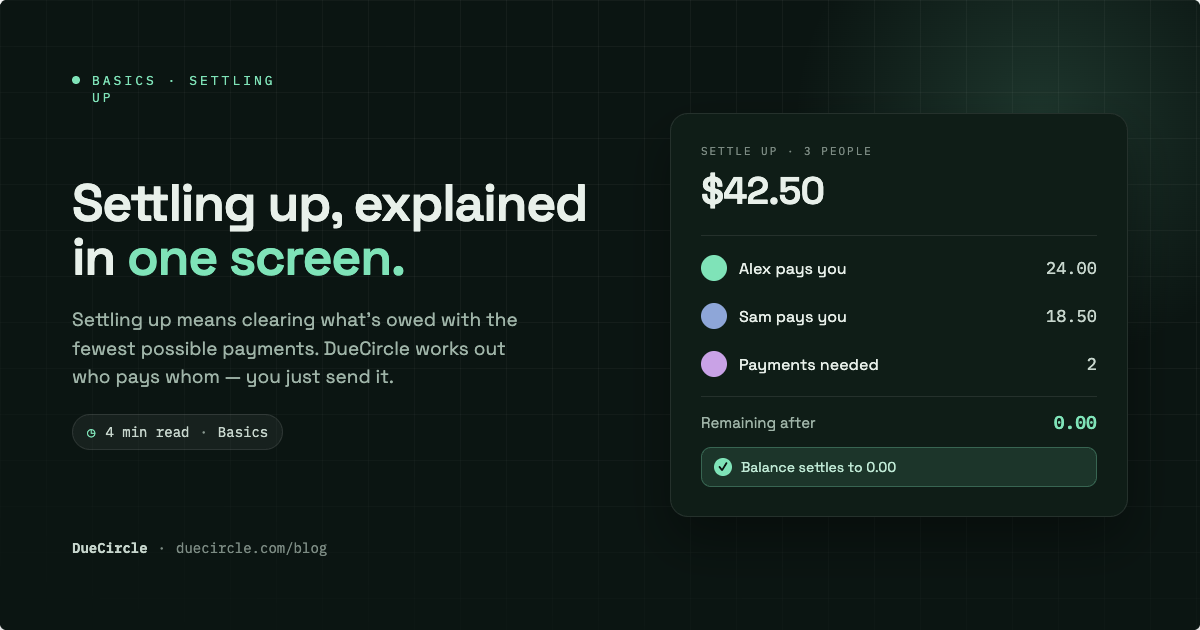
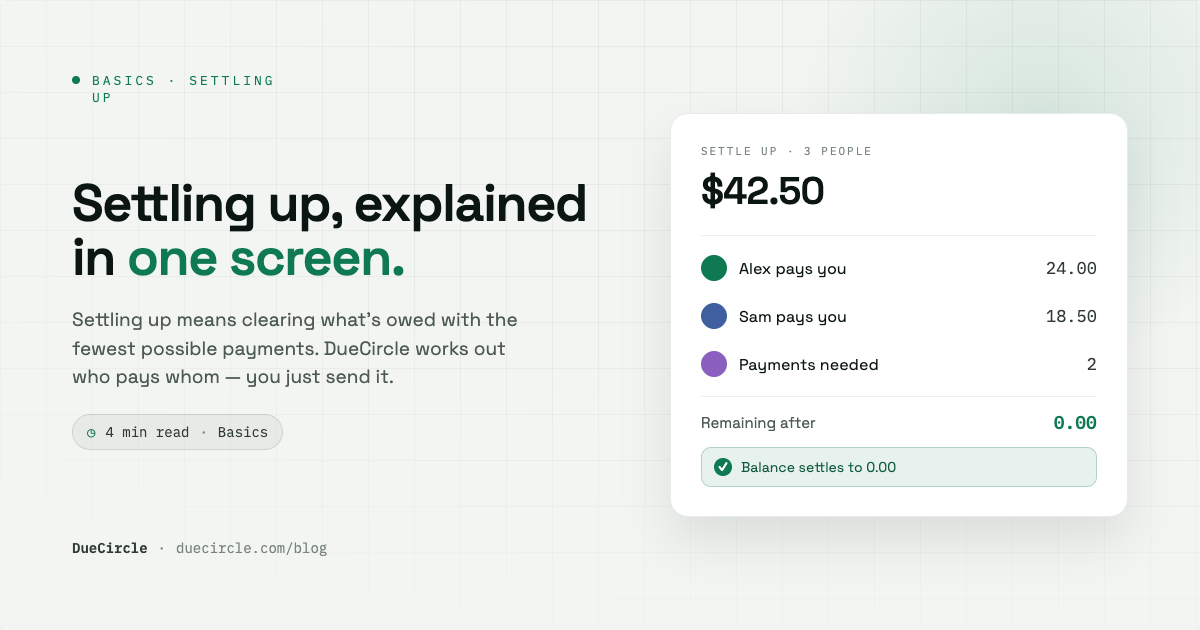
DueCircle tidies this into a plan that clears everyone in a few payments. It matches the largest debtor to the largest creditor, hands over what squares them, and moves to the next pair until everyone is at zero.
- It reads the current balances for the whole group
- It matches the biggest debtor with the biggest creditor
- That transfer clears one of them, then it moves on
- It repeats until nobody owes anybody
- You get a short, plain list of who pays whom
You pay outside, then mark it done
Here is the part people miss: DueCircle never moves your money. It works out the plan, but the actual payment happens the way it always has, a bank transfer, cash, whatever you two use.
Once you have paid, you mark it recorded in the app so the balance updates and everyone can see it is handled. The app tracks; you pay.
Take three flatmates. You paid ₹4,500 for groceries, Ravi paid ₹1,500 for internet, Meera paid nothing, and it all splits equally at ₹2,000 each. So you are owed ₹2,500, Ravi owes ₹500, and Meera owes ₹2,000. The plan: Meera pays you ₹2,000 and Ravi pays you ₹500. Two payments, and everyone is clear.
Why this makes settling painless
Settling up sounds formal, but it is really just the polite end of a shared cost, everyone squared, nobody quietly out of pocket. The hard part was never the paying, it was figuring out who owes whom and by how much.
DueCircle is free forever and private, with no card and no bank link. It keeps the running balance honest and turns it into a short payment plan when you are ready, so the maths is done for you and nobody has to chase anyone to close things out.
Published 13 July 2026.