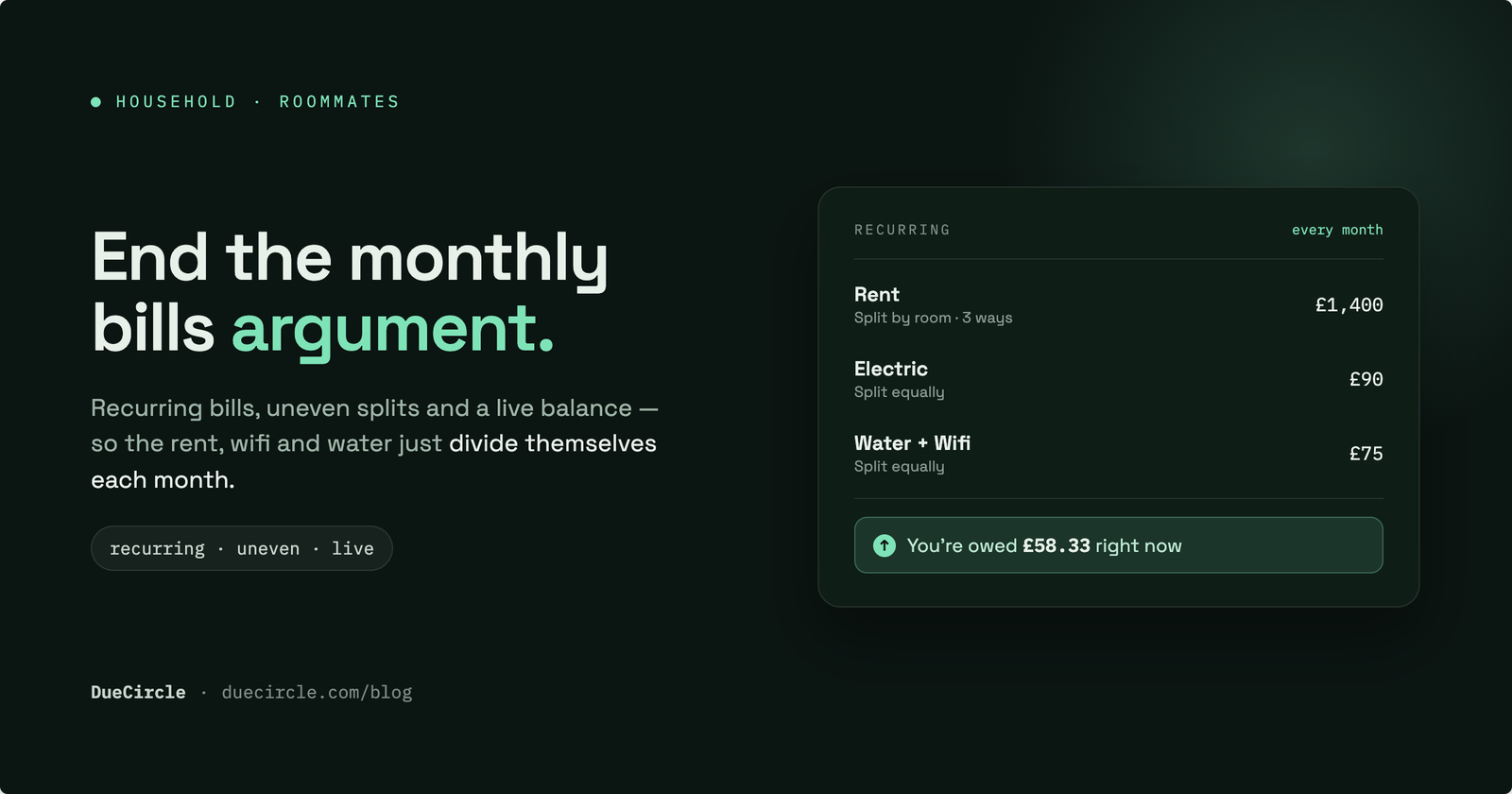
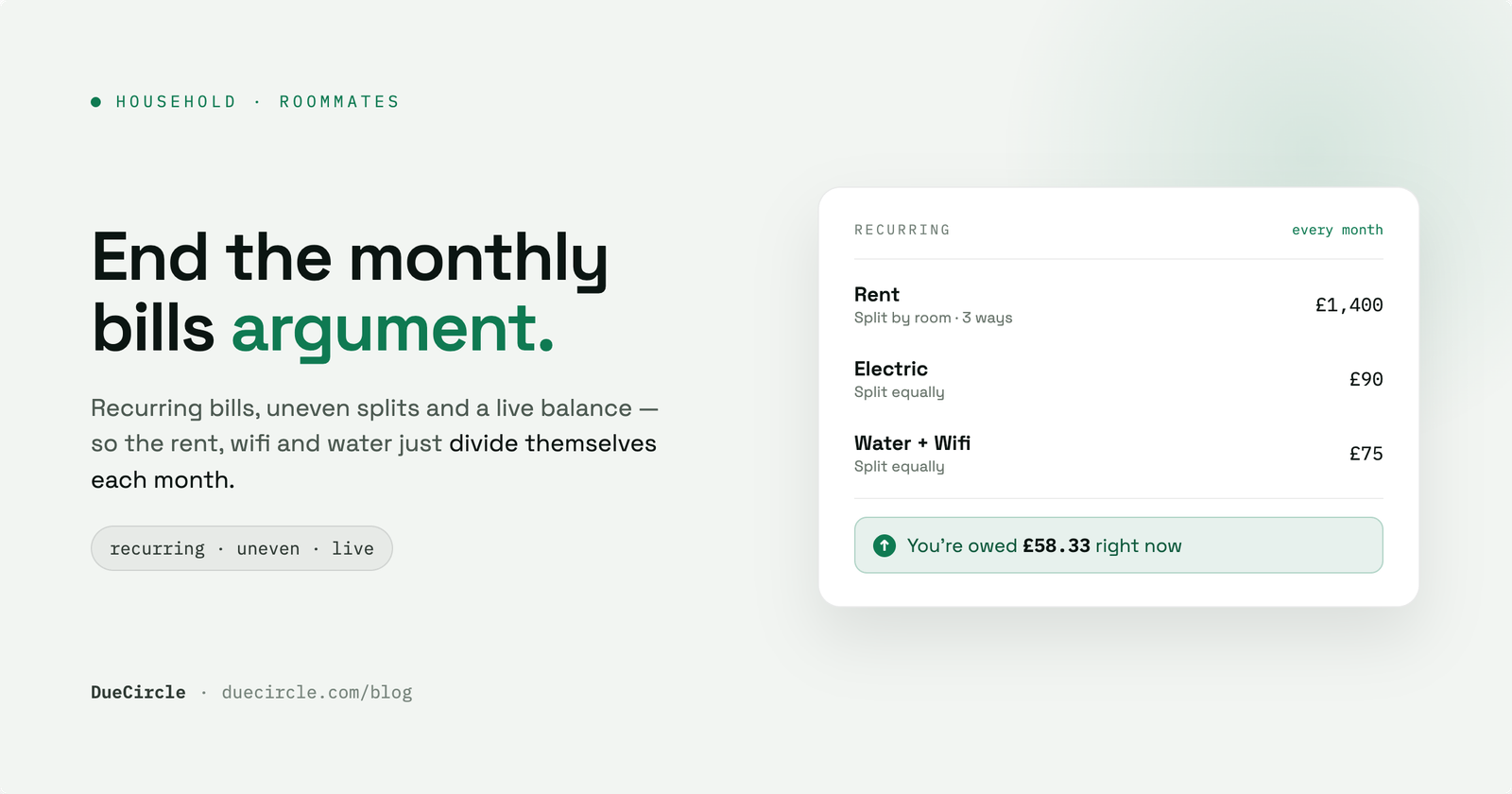
The monthly bill argument is rarely about money. Nobody in a shared flat genuinely disputes that electricity costs what it costs. The friction comes from the chasing, the forgetting, and the quiet sense that one person is carrying the admin while everyone else waits to be reminded.
A roommate expense tracker solves the part that actually causes tension: not the sum, but the record. Once the flat can see who owes what at any moment, the conversation stops being an accusation and becomes a glance at a shared number. This guide covers how to set that up once and leave it running.
The problem is the chasing, not the maths
Splitting a bill three ways is arithmetic a ten-year-old can do. What wears people down is everything around it. Someone pays the wifi on the 2nd, someone else pays the water on the 14th, and by the end of the month nobody can say with confidence who is ahead and who is behind.
So the bill gets paid, but the settling drifts. One flatmate ends up sending three reminders about the same forty pounds and starts to feel like the household's accountant. The other genuinely forgot, because there was no record in front of them to forget against.
The fix is to remove the human memory from the loop entirely. When bills are recorded as they happen and balances update on their own, no one has to remember, reconstruct, or nag. The tracker holds the state that people were trying, and failing, to hold in their heads.
Set up recurring bills once, not every month
Most household costs are the same every month, so there is no reason to enter them by hand every month. Rent, wifi, electricity, water and streaming are all predictable in timing even when the amount moves a little. These belong in the tracker as recurring shared bills, added once with a due date and a recurrence.
From then on, each occurrence is tracked automatically. DueCircle raises the bill on its due date, splits it the way you agreed, and marks it against whoever is responsible. You are no longer renegotiating the split every month; you set the rule in January and it holds until something genuinely changes.
This is where the forgetting stops. Reminders arrive at seven, three and one day before a bill is due, and anything unpaid past its date carries an overdue marker so it cannot quietly slip. Nobody has to be the person who remembers the water bill.
- Rent — fixed monthly, split by your agreed shares
- Wifi and streaming — small, even, easy to overlook
- Electricity and water — recurring timing, variable amount
- Council tax or building fees — set once, tracked every cycle
Uneven contributions, handled without it feeling personal
Not every flat splits evenly, and that is fine. One person earns more, another has the larger room, a couple shares a space that a single occupant does not. The trouble is that renegotiating these differences out loud, every month, makes them feel personal in a way they need not be.
A tracker lets you set the imbalance once and then forget it. You can split a bill by percentage, say 60/40, when one person simply agrees to carry more. Or you can split by shares when the ratio follows something concrete, such as three people where a couple counts as two shares and a single occupant as one.
The point is that the fairness lives in the settings, not in a recurring conversation. Once 60/40 is agreed and entered, every future bill applies it silently. No one has to reassert why they pay less, and no one has to feel they are asking for a favour each month.
A live balance, so you settle instead of reconstruct
The alternative to a running balance is archaeology. At the end of a few months someone opens a chat thread and tries to piece together who paid the deposit, who covered the extra grocery run, and who fronted the internet when the card expired. It never fully reconciles, and the exercise itself breeds suspicion.
A live balance removes the need to reconstruct anything. Every bill, payment and split feeds one number per person, kept current as things happen. At any moment you can see that you are twenty pounds up or thirty pounds down, without adding a single figure yourself.
Because the balance is always right, you settle on your own rhythm. Some flats square up monthly, others let it net out across the term and settle when someone moves. Either way you are paying a known, agreed figure, not opening a negotiation.
A worked example: three flatmates, one month
Take a three-person flat. Rent is £1,500, split by shares: Priya and Sam share a room and count as two shares, Tom has the single and counts as one, so rent divides into quarters of £375 each, with Priya and Sam's room owing £750 between them. Wifi is £45 and streaming is £15, both split evenly at £20 each. Electricity comes to £90, also even at £30 each.
Now the payments fall as they always do, unevenly. Tom pays the full rent from his account because it leaves his card. Priya covers the wifi and streaming. Sam pays the electricity. Nobody has paid exactly their share, which is normal.
The tracker nets this out without anyone reaching for a calculator. Tom paid £1,500 but owes £375 rent plus his utilities, so he is well ahead. Priya and Sam owe their rent shares but have each covered a utility. The balance simply shows who is up and who is down, and the flat settles those two or three figures once. No thread, no reconstruction, no argument about a bill from five weeks ago.
- Rent £1,500 — by shares: Tom £375, Priya and Sam £750 together
- Wifi £45 and streaming £15 — even, £20 each
- Electricity £90 — even, £30 each
- Balances net every payment down to a single figure per person
A little etiquette goes a long way
Tools remove the friction, but a few habits keep the goodwill. Agree the splits openly when you set them up, so the percentages and shares are a shared decision rather than something one person imposed. Transparency at the start is what makes the automated part feel fair later.
Keep the tracker honest by logging real costs promptly and marking payments when they land. A balance is only trusted if it reflects what actually happened, and it takes seconds to keep it current. The whole benefit is that no one has to take anyone's word for it.
DueCircle is free, private and never connects to a bank, so the flat's finances stay between the flat. Settle periodically, keep the record clean, and the monthly argument simply never has anything to start from.
Published 9 June 2026.