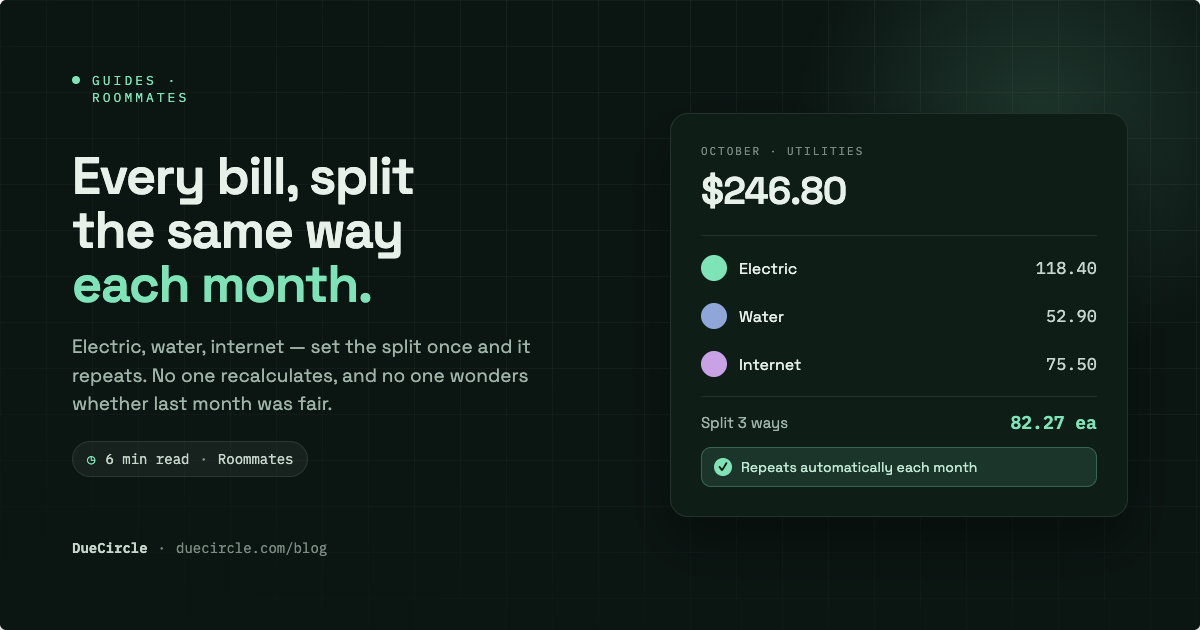
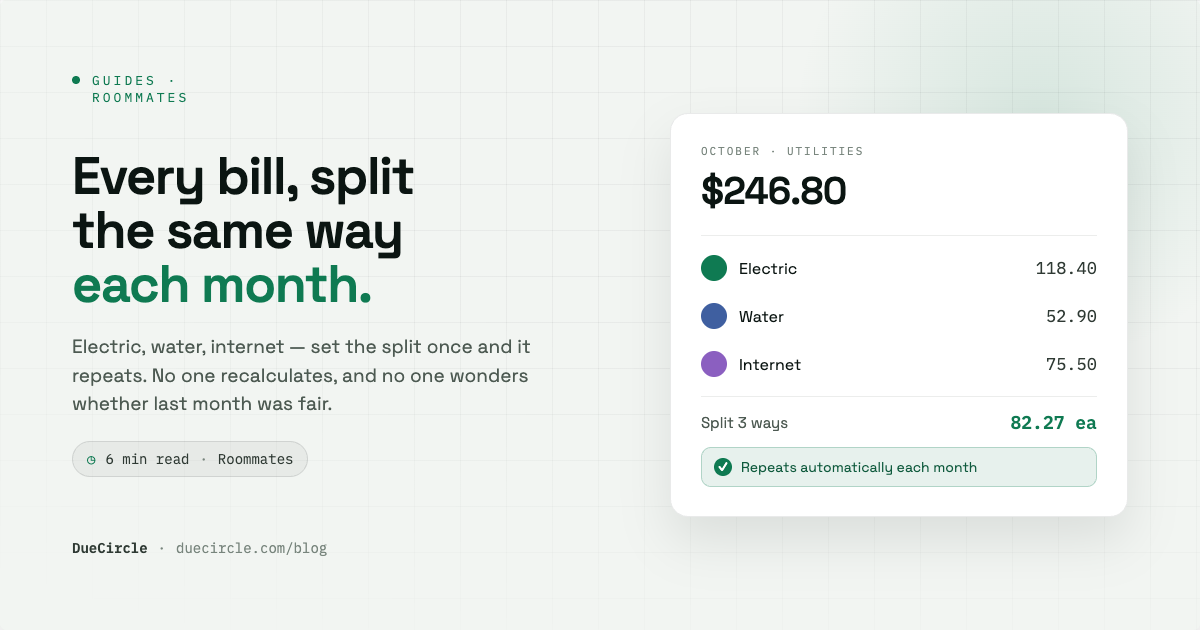
Utilities are the bills most likely to start a house argument. They arrive at different times, in different people's names, and rarely split as cleanly as rent. One person set up the wifi, another's name is on the electricity, and somehow it is always the same housemate paying first and waiting.
A fair system fixes nearly all of it, and it is simpler than most housemates expect. Here is how to split utility bills between roommates so the method is agreed once and nobody keeps re-litigating it every month.
Decide the split method before the first bill
Equal is the sensible default for shared services like wifi, where everyone gets the same thing regardless of how much they use it.
Usage-weighted is fairer when consumption is genuinely uneven. Someone who works from home all day uses more electricity than someone out of the house for twelve hours. Shares or percentages handle this cleanly: give the heavier user two shares to everyone else's one, and let the split follow.
Whatever you choose, agree it out loud once, at the start, so no single bill turns into a fresh negotiation.
Handle bills that are in one person's name
In most houses each utility sits with a different person — electricity in one name, wifi in another, gas in a third. The fair fix is not to chase reimbursements bill by bill, but to log each bill against whoever paid it and let a running balance even everything out.
Say that over a month the electricity is ₹3,000 (paid by Aarti), wifi ₹1,200 (paid by Ben) and water ₹900 (paid by Chen), all split equally three ways — ₹1,700 each. The balances show Aarti is owed and Chen owes, so the house settles the net once instead of making three separate transfers.
Splitting when usage really isn't equal
When one room runs the AC all summer, or a couple shares a space a single occupant does not, an equal split stops feeling fair. Percentages and shares are made for exactly this: weight the heavier users' portion and keep everyone else on an even share.
The point is not perfect precision to the last rupee. It is a rule everyone signed off on, so the split feels agreed rather than imposed — which is what actually keeps the peace.
Keep a shared record everyone can see
The recurring friction in a shared house is memory: who paid the gas last month, and are we even? A shared ledger removes the question. Log the bill when it arrives, pick the split, and the balance updates for everyone at once.
DueCircle does this free and private: split equally, by shares or by percentage, keep a live balance, and settle the net in just a few payments. It does not connect to your bank — you are keeping a shared record, not automating your accounts.
One honest note: dedicated recurring-bill reminders are on our roadmap, not in the app yet. For now you add each bill as an expense the day it lands, which takes a few seconds and keeps the balance current.
A simple monthly rhythm
The whole system fits into a short habit the house can run on autopilot.
- Agree the split method once, at the start.
- Log each bill the day it arrives, against whoever paid.
- Check balances at month-end.
- Settle the net in one or two payments.
- Repeat — and never argue about the gas bill again.
Published 27 July 2026.