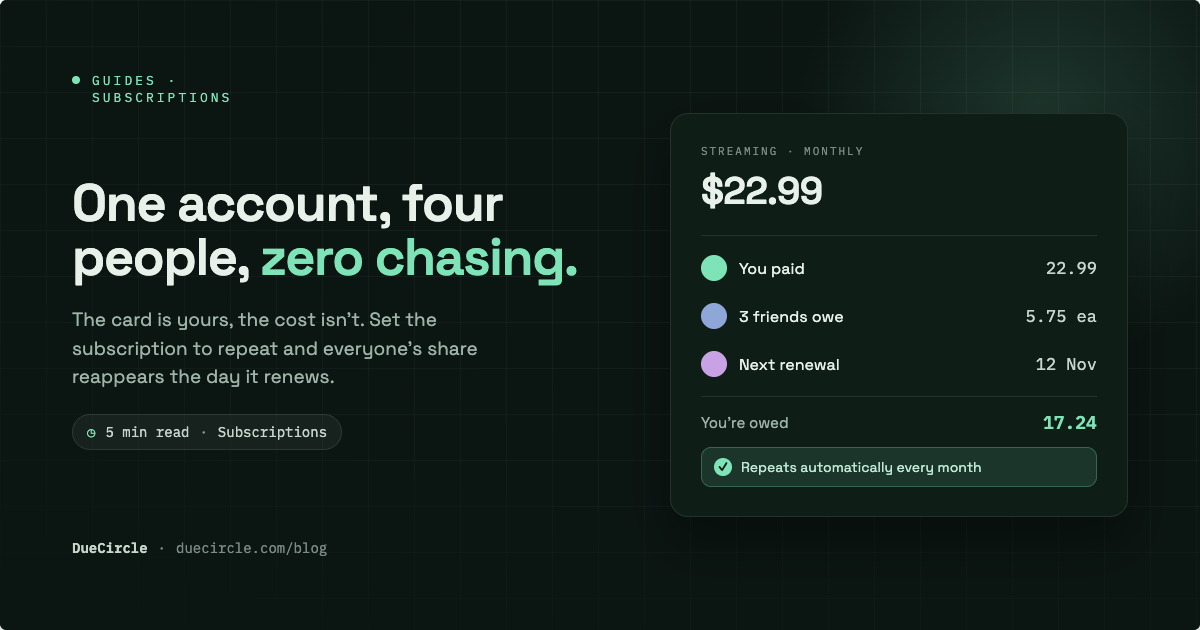
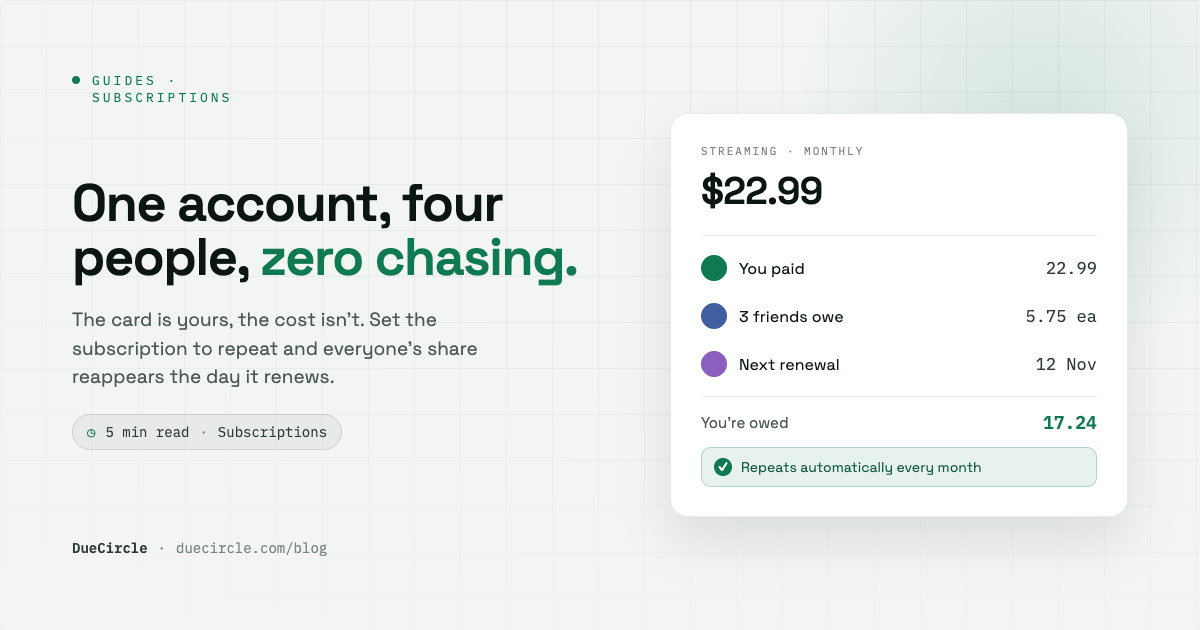
One person's card is paying for the group Netflix. Someone else set up the Spotify family plan and quietly eats the whole cost. There is a YouTube Premium plan floating around that nobody is quite sure who owns anymore. Shared subscriptions are brilliant value and a small ongoing source of low-key unfairness.
The problem is never the money — a streaming plan split five ways is pocket change each. The problem is that the person whose card it is has to remember, chase, and feel slightly awkward asking for ₹150 every month. This is how to split a subscription with friends so the payer stops carrying it alone, and how to handle the recurring part honestly.
Someone's card is carrying the whole thing
Every shared subscription lives on one real card, tied to one real person. That person gets the full charge every month whether or not anyone has paid them back. It is a small amount, so it feels petty to bring up, which is exactly why it drifts for months.
Multiply it out and it stops being trivial. A ₹649 streaming plan the payer never gets reimbursed for is nearly ₹7,800 a year out of one pocket for something four people enjoy. Splitting it is not stinginess. It is just putting the cost where the benefit is.
Split the monthly cost, and be honest about who still uses it
Most subscriptions split cleanly and equally — everyone on the plan pays the same share. A ₹649 family plan across four people is ₹162.25 each. Because DueCircle stores amounts as whole paise and splits by the largest-remainder method, that becomes ₹162.25, ₹162.25, ₹162.25 and ₹162.25 with any leftover unit handed to one named person, so the four shares always add back to exactly ₹649.
The harder question is who is actually still watching. Plans accumulate ghost members — the friend who joined for one show and never opened it again. There is no shame in it, but there is no reason they should keep paying either.
If someone has stopped using it, drop them from the split. In DueCircle you choose the participants on each expense, so you can exclude anyone the subscription no longer applies to and split only among the people genuinely using it.
A note on reminders — what DueCircle does not do yet
It would be lovely if the app pinged you on the same date each month to log the subscription automatically. Recurring bills, due dates and reminders are on DueCircle's roadmap — but they are not built yet, and I would rather tell you that than pretend otherwise.
So for now, a shared subscription is not a special 'bill' in the app. You handle it as an ordinary expense that you add once each billing cycle, under whoever's card it sits on. It takes about ten seconds when the charge lands.
If you want a nudge until the feature exists, set a simple repeating reminder in your own phone's calendar for the day the payment leaves. That is the honest workaround, and it works fine.
The monthly routine that keeps it fair
Because it repeats, the whole thing works best as a tiny habit rather than a big reckoning. When the charge hits the payer's card, they add it and the balances update for everyone else. That is really all there is to it.
Kept as a short checklist, the routine is:
- When the subscription charges, add it as an expense under whoever's card paid.
- Split equally among the people actually using it; exclude anyone who has dropped off.
- Watch the live balances tick up for everyone who owes their share.
- Every month or two, settle the net so it never piles up.
- Once a year, ask who still uses it and resize the split.
Let a running balance chase it, not you
The reason the payer stops resenting the plan is that they no longer have to ask. The balance says who owes ₹162.25 and to whom, plainly, without anyone having to send an uncomfortable 'hey, about Netflix' message.
When you settle, DueCircle gives you a plan that clears everyone in a small number of payments by matching the biggest debtor to the biggest creditor. Friends pay each other directly and mark it recorded — the app never touches the money.
DueCircle is free forever, with no card and no paid tier, and it keeps your group's details private and off the public web pages. Until proper reminders arrive, it still does the maths and holds the record, so the person whose card is on the line does not have to keep chasing everyone else.
Published 11 July 2026.