Moving into a flatshare is the fun part. Moving out is where the money gets awkward: a lump of deposit to divide, final bills that land after someone has already left, and the small matter of who broke the wardrobe door. It is the moment shared households most often fall out.
The mess is manageable if you treat it as arithmetic instead of a negotiation. This is about splitting a returned deposit fairly, sharing pro-rated final bills, handling damage deductions, and keeping the whole thing recorded so nobody feels quietly cheated on the way out.
Start with what each person actually put in
Deposits are not always split evenly, so do not assume. The person in the big room may have paid a larger share of the original deposit; someone who joined later may have paid a different amount. Dig out what each person actually contributed before you divide anything.
If everyone paid the same into the deposit, an equal split back is fair and simple. If contributions differed, the returned deposit should come back in the same proportions, otherwise someone is quietly subsidising someone else on the way out.
Write those original contributions down first. Everything else in the move-out settlement builds on this one honest starting number.
Split the returned deposit by shares
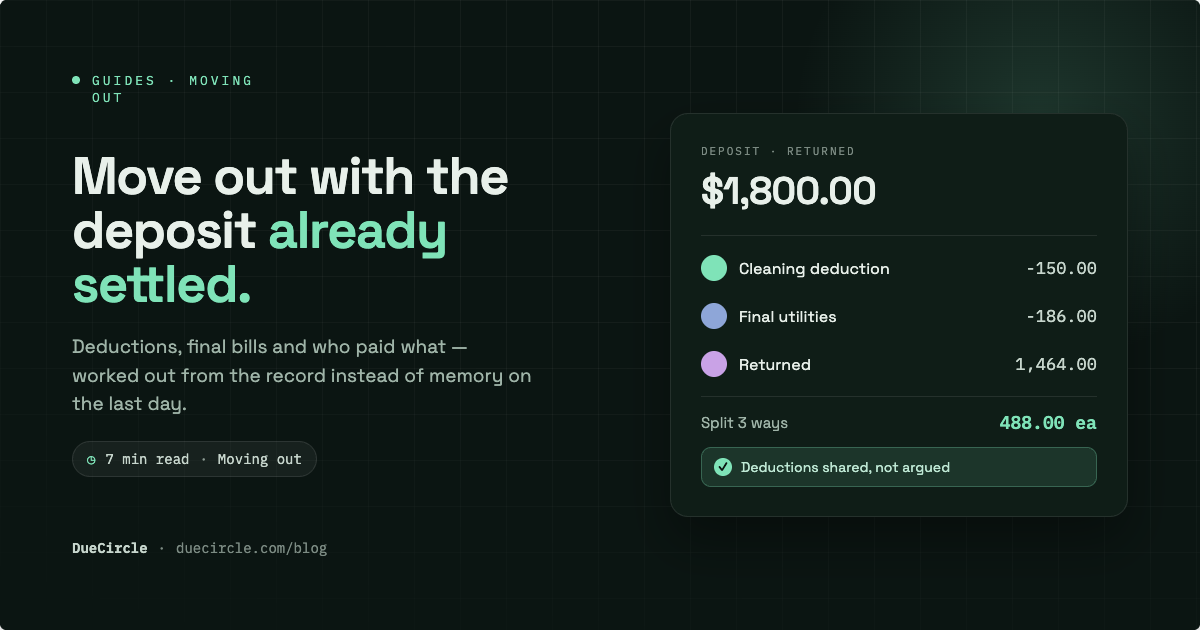
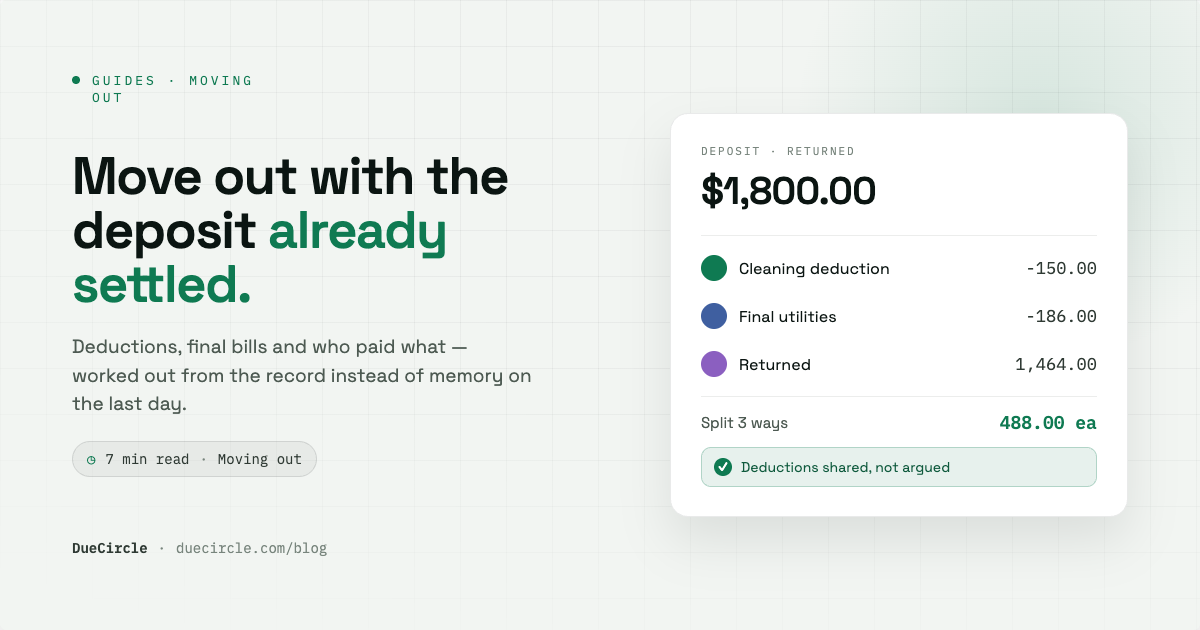
Landlords rarely return the full deposit, so you are usually dividing a smaller number than you put in. The fair way is to return it in the same proportions people paid in, which is exactly what a shares split does.
Say three flatmates paid a ₹60,000 deposit as ₹20,000 each, but the landlord returns only ₹54,000 after cleaning. Split ₹54,000 by equal shares and each gets ₹18,000, so everyone absorbs the ₹2,000 cleaning cost equally, because everyone lived there.
If contributions had been uneven, say ₹30,000, ₹18,000 and ₹12,000, you would split the returned amount by shares of 30:18:12 instead, so each person gets back the same fraction they put in. The proportions do the fairness for you.
Deductions for damage belong to whoever caused them
Cleaning and normal wear are shared costs. Everyone lived there, everyone chips in. But a specific bit of damage is different. If one person's dog chewed the sofa, that deduction should come off that person's share, not the whole group's.
The clean way to handle it is to split the shared deductions across everyone, then apply any person-specific deduction to just that one person. Agree it out loud before you divide, so it does not feel like an ambush at the door.
Do not forget the final bills
The deposit is only half the story. The last electricity, gas, internet and water bills often arrive after people have scattered, and pro-rating them is where good intentions quietly die.
Split each final bill for the period people actually lived there, by whatever rule you used all along, whether equal, by income, or by room. If someone moved out two weeks early, pro-rate their share of that final month.
Add these as ordinary expenses alongside the deposit so the whole move-out lives in one place. There is no separate bills feature to chase; one shared record holds the lot.
- Final electricity and gas bills
- Last month of internet and water
- Any pro-rated rent for a partial month
- Shared cleaning or repair costs
- Society or council dues, if any
Settle the move-out in one clear list
Once the deposit split and the final bills are in, you have a tangle of small amounts flowing in different directions. Rather than everyone paying everyone, a settle-up plan matches who owes to who is owed and clears it in a few payments.
DueCircle handles the arithmetic, including the deposit shares, the pro-rated bills, and the damage deductions, and keeps it exact. Amounts are stored as whole paise and split so the shares always add up; any stray leftover paisa is given to one named person and shown, not hidden.
It is free, private, and never touches your money, so people pay each other directly and mark it recorded. The end of a flatshare can be a clean, agreed list instead of a lingering bad feeling, and you can archive the group knowing the records stay intact.
Published 6 August 2026.