You covered the taxi, or fronted the deposit, or paid for the group dinner because your card was the one on the table. Now it has been two weeks, nobody has mentioned it, and you are quietly weighing whether the money is worth the awkwardness of bringing it up.
It usually is worth it, and it does not have to be awkward. The discomfort almost always comes from the way we ask, not the asking itself. Here is a calmer approach — plus a way to make the money part impersonal, so your friendship never has to carry it.
Why it feels awkward, and why that is fixable
The awkwardness is really about mixing money and closeness. Asking directly can feel like you are questioning the friendship. But the debt is a fact, not an accusation, and treating it as a plain fact takes almost all of the sting out.
Two smaller things make it worse. We wait too long, so by the time we mention it the amount feels mysterious and loaded. And we hint instead of saying the number, which leaves everyone guessing and tense. Both are easy to avoid.
Ask early, and say the exact number
The single best move is to not let it age. A message the same day — 'I got the ₹2,400 for the cab, your share is ₹600 whenever suits' — lands as admin, not confrontation.
Name the figure. Vagueness like 'you owe me for the thing' makes people defensive because they have to work out what you mean and whether you are annoyed. A clear number they can just pay makes it effortless.
A short script you can actually send
You do not need to be clever, just clear and warm. The pattern is always the same: a friendly opener, the exact number, and an easy exit line that removes any pressure.
- 'Hey! I paid the ₹4,800 for dinner last night — everyone's share is ₹1,200. Pay whenever suits.'
- 'No rush at all, just flagging so I don't forget: that's ₹600 from the cab.'
- 'Squaring up from the trip — you're at ₹1,450 whenever you get a sec.'
Let a shared balance do the asking for you
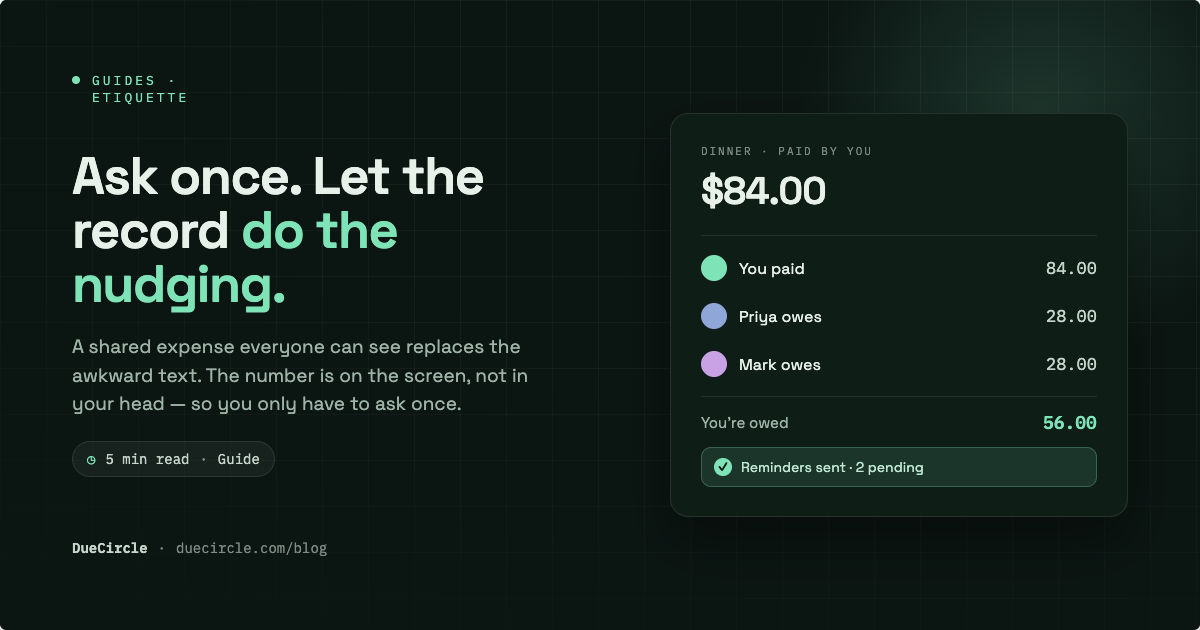
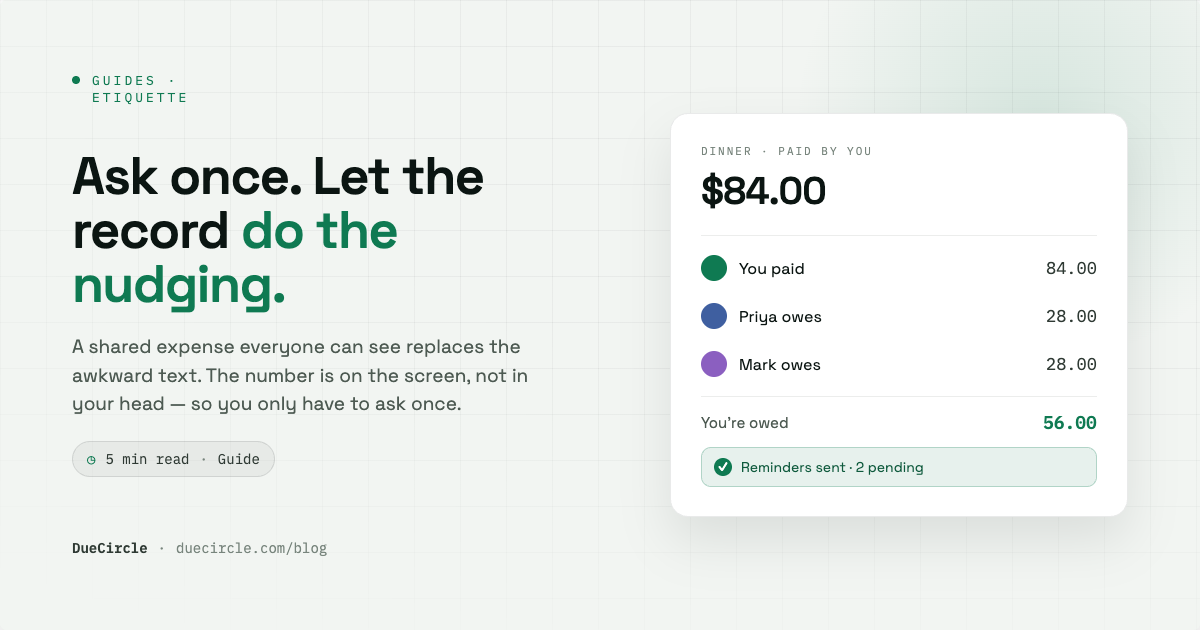
The surest way to never send an awkward message is to make the number obvious to everyone from the start. When a group records expenses as they happen, each person can already see their own balance, so the ask becomes 'the running total says I'm at ₹600', not 'you owe me'.
DueCircle keeps a live balance for a whole group and for a one-to-one split with a single friend. At the end it shows the short list of payments that clears everyone, so nobody has to chase — the plan just tells each person what to send.
It is free and private. You are not linking banks or moving money through it, only keeping an honest shared record, so in a real sense the conversation has already been had before anyone opens their wallet.
When they still don't pay
Assume forgetfulness first, because it usually is. A light nudge with the number again — the same friendly line, resent a week later — clears most of these. For a larger sum, offer to split it into a couple of parts; people pay what feels manageable.
Keep it about the money, never the character. The real win is prevention: a shared record stops small debts from quietly growing into the silent resentments that actually damage friendships.
Published 28 July 2026.